Inside Collab.Land: Community Is Not Neutral
We are living through overlapping instability.
Political authority is contested across borders. Economic security is uneven and increasingly fragile. Cultural consensus is thin. Technological change continues to accelerate while the systems meant to absorb it fall further behind.
In Iran, months of unrest driven by economic collapse and political repression have been met with violent crackdowns, internet shutdowns, and mass detentions. In Venezuela, instability shapes daily access to money and mobility. In parts of Europe, governments change faster than policy can settle. In the United States, people operate inside parallel realities with little shared agreement on facts or legitimacy. Traditional media remains consolidated, slow, and owned by a small number of actors.
The tech industry reflects this shift. Tens of thousands of jobs have been eliminated across companies of all sizes. People who once relied on stable employers are now independent, displaced, or rebuilding without a clear map, especially against the backdrop of AI. Crypto exists inside this reality.
Bitcoin reached an all-time high in October 2025, crossing $126,000. At the same time, large portions of the ecosystem contracted. NFTs fell to all-time lows. NFT Paris, one of the most popular and well-respected conferences in the space, was cancelled. InfoFi collapsed as incentive-driven models ran directly into X’s removal of API access. Areas that once drove experimentation and cultural energy slowed.
When institutions feel unreliable, employment feels temporary, and markets feel volatile, people stop optimizing for reach. They start looking for orientation.
What crypto communities offer that nothing else does
Crypto communities are structured differently. They are borderless by default. They are not organized around nationality, language, or physical proximity. They form around shared ownership, shared incentives, and shared work.
People from different political systems, currencies, and economic conditions occupy the same spaces because the infrastructure allows it. Capital moves across borders. Conversation follows. Context accumulates.
That mix of perspectives is structural.
Shared ownership changes how people participate. People are not only expressing opinions. They are exposed to outcomes. They bring perspective shaped by where they live and how they navigate instability. And staying compounds that value.
Shared ownership changes how people relate
Crypto communities combine voice with stake. Participation is economic as well as expressive. Ownership creates continuity. Continuity creates memory. That memory matters when conditions deteriorate.
When markets turn, people retreat to spaces they trust. When narratives diverge, they rely on peers with shared context. When incentives weaken, they stay where relationships already exist.
NFTs are not the only way in
Starting in 2021, conversations about crypto communities centered heavily on NFTs. NFTs played an important role in identity and cultural signaling, but they are not the only way.
Fungible tokens often do more of the actual work.
They allow gradual entry, earned access, and contribution-based participation. They reduce the upfront cost of joining and make it possible to deepen involvement over time.
For people operating in uncertain economic conditions, that flexibility matters.
Community is not a buzzword
In crypto, “community” is often treated as branding. That does not mean the spaces themselves are trivial. Many communities work every day. The mistake is treating the container as the outcome.
A server without ownership, incentives, or accountability is not resilient. A community shows its value under pressure. Who stays when incentives fade? Who keeps contributing when markets turn? Who brings information from outside the dominant narrative?
Tokenized communities make this visible because participation is tied to ownership, bought or earned.
Why joining or starting one matters
If you are building in this environment, community is not optional. The only question is whether it forms intentionally or by default.
Projects without communities depend on platforms they do not control, narratives they cannot correct, and markets they cannot predict.
Projects with communities have somewhere to regroup. They retain context. They retain people who understand the work well enough to carry it forward when conditions worsen.
Why I am here
We are global and fragmented at the same time. Borders are politically rigid and economically porous. Capital, labor, and information no longer move together. Tokenized communities are one of the few structures designed for that mismatch.
They are imperfect. They require care and maintenance. But they offer something increasingly rare: reasons to keep showing up when everything else feels provisional.
Community is not neutral. In an unstable and increasingly disconnected world, it is one of the few forms of connection we still control.
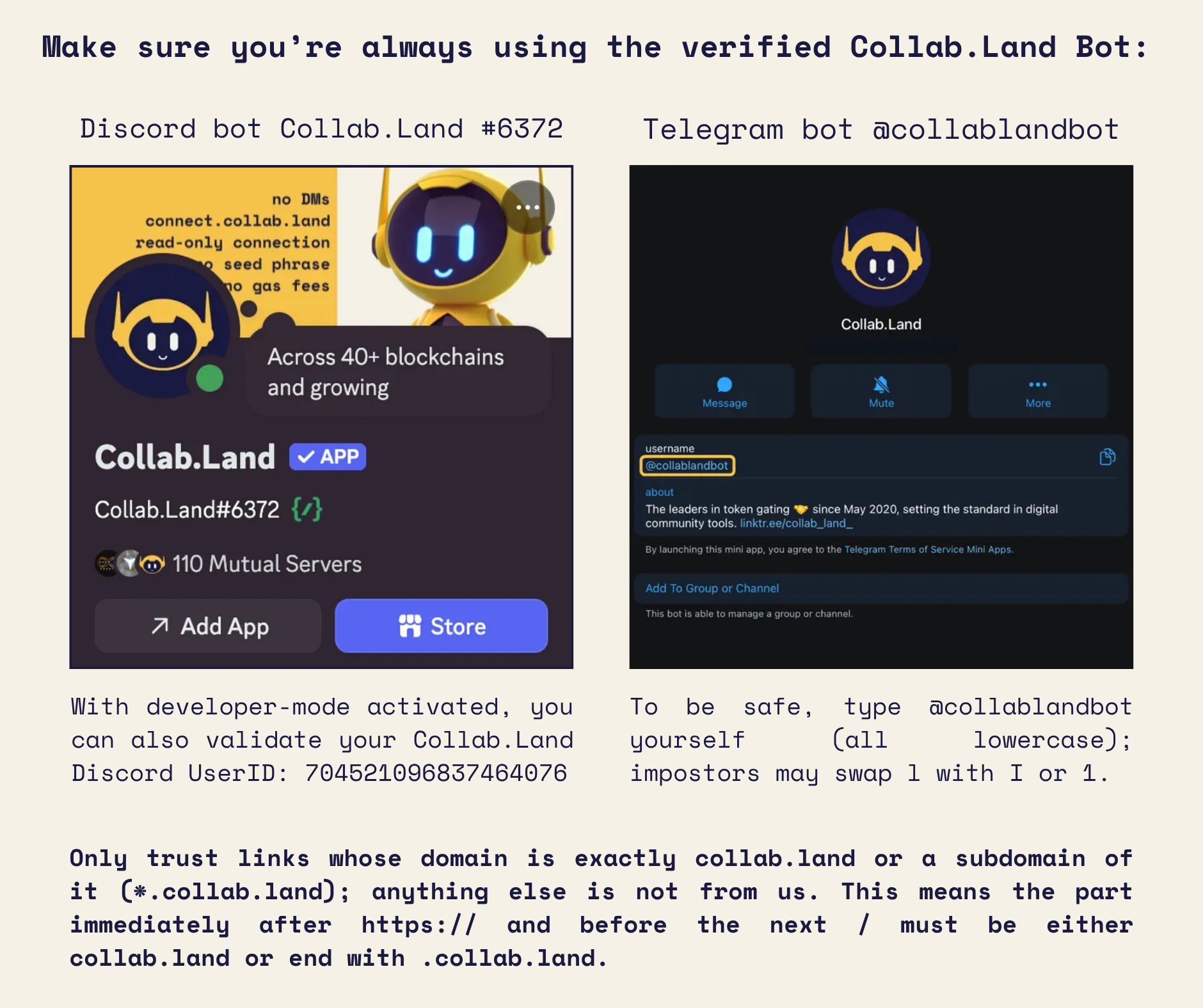
Collab.Land token gating and membership verification operates as a read-only application. By signing a message to add a new wallet, you affirm ownership of that particular wallet address. Collab.Land solely accesses public blockchains to verify that a member’s wallet addresses are linked to the required tokens for role or group membership. Collab.Land maintains no access beyond reading public wallet addresses, which are transparent to all users.