Inside Collab.Land: What Actually Lasts

By Anjali Young.
Online communities tend to form when the people around you aren’t interested in the same things you are, when the conversations you want to have aren’t happening where you live or work.
That’s where I come from.
I spent years in online spaces because I couldn’t find anyone around me to talk to about the things I cared about, or learn from, or argue with, or complain to, who would actually understand. My world at the time may have been attachment parenting, homeschooling, and international adoption, but the pull toward shared knowledge, shared experience, and shared frustration was the same.
The last almost six years of that have been in crypto, with a front-row seat to more than 50,000 tokenized groups across Telegram and Discord.
Seeing that many groups up close changes how you think about them. You stop putting as much importance on how teams talk about their communities, and start paying attention to what actually happens. Who shows up. When they show up. What causes people to leave. What happens when things get tense.
One pattern shows up consistently. A lot of what gets called “community” in Web3 is really just people coordinated around wallets.
That’s not a critique. It’s a description. People respond to what’s in front of them, and crypto doesn’t change that.
Participation is fluid. Some people observe. Some show up briefly for a specific opportunity. Some stay involved longer. Most move between those states over time. That’s normal.
Things start to wobble when systems quietly assume one kind of participation and then react badly when they get another. Activity spikes around launches and fades afterward. Frustration surfaces under pressure. None of that is surprising. It’s coordination without commitment.
Incentives play a big role here. I’ve watched thousands of projects use points, roles, quests, and rewards to drive early activity. They work. They create motion. They make spaces feel busy.
What they don’t do on their own is create attachment.
When incentives slow down, behavior shifts. Engagement drops. Tension rises. Teams look for the next lever. That isn’t a group breaking. It’s a system doing what it was designed to do.
Actual community behavior tends to show up later, if at all. It shows up when there’s no obvious reward and people are still around anyway. That phase is quieter and harder to see, especially if you’re focused on metrics.
A large share of what gets labeled “community growth” in crypto comes from airdrop participation. That makes sense. People respond to incentives.
Airdrop participants aren’t doing anything unusual. They’re participating in an environment built around financial upside. Founders and investors are doing the same thing.
When projects reward wallets for showing up, wallets show up. When eligibility matters, people adjust how they participate. That’s how systems behave.
It gets uncomfortable when that participation is treated as proof of long-term commitment. In most cases, it was never meant to be.
Projects use airdrops to increase visibility and activity. Participants use projects to capture value. Both sides understand the exchange. Activity goes up. Channels get louder. Numbers look strong.
Then the token launches.
Some people leave. Some disengage. A smaller group stays. Teams often experience that moment as unexpected. It isn’t. It’s what short-term participation looks like when it runs its course.
Airdrop-driven numbers are real. They show who showed up. They don’t tell you who plans to stay involved or take responsibility for what happens next.
You can see this clearly in the 2025 TGE cycle. Tokens are losing value faster than they did in earlier cycles, sometimes within days or hours.
The playbook is familiar. Large pre-TGE incentive programs. Strong participation numbers. Then the token launches and interest fades quickly.
What doesn’t happen is compounding.
Once the exchange is complete, there’s often little reason for members to stay engaged. The strategy works, but briefly. The real question is how many times it can be repeated before it stops working at all.
Another pattern I see consistently is what happens to founders after TGE. Founders who stay visible and involved rarely get credit for staying. Frustration tends to land on them.
Unmet expectations pile up. Boundaries feel personal. Maintenance work goes unnoticed until something breaks. Staying sounds admirable in theory. In practice, it often looks like repeating the same explanations and absorbing criticism for decisions made under real constraints.
I say this as someone who’s had plenty of moments where walking away would have been easier, louder, and probably better received in the short term.
One thing I’ve learned from building Collab.Land is that sticking around does come back into fashion, even if it doesn’t feel like it at the time. Serving day after day is mostly thankless work. You don’t get rewarded for consistency in the moment. Over time, though, people notice who’s still there. Time builds confidence. Presence creates a sense of security. When things feel uncertain, people tend to gravitate toward what already feels familiar and steady, especially what they’ve seen hold up before.
If we want communities that last, it’s worth asking what actually supports the people holding them together.
Too often, maintenance is treated as something to deal with later. Launch gets the roadmap. Growth gets the resources. Incentives get the budget. Maintenance gets whatever’s left, if anything.
But maintenance is what determines whether a community survives volatility. If a system is built mainly for acquisition and extraction, instability after TGE isn’t surprising.
The encouraging part is that maintenance isn’t mysterious. It looks like clear ownership, consistent presence, and expectations that are set incrementally and revisited often.
Conflict is part of that work. Groups don’t weaken because disagreement exists. They weaken when disagreement can’t be addressed.
Having a point of view matters. Making decisions matters. Accepting that not everyone will agree matters. Avoiding conflict usually leads to disengagement, not harmony.
Groups don’t get stronger by avoiding hard moments. They get stronger by making it through them.
What matters is what happens after tension shows up. Whether people stay in the conversation. Whether repair is possible. Whether recovery is treated as normal work instead of a failure.
I’m still optimistic because I’ve seen people stick through difficult periods when someone stayed involved, set expectations, and treated maintenance and repair as part of the job.
Crypto is global by design. For many people, it’s the first time their work or interests extend beyond the people physically around them. The people nearby don’t share the same context or curiosity.
So they look online. Not for hype, but for understanding.
That’s how online communities form. When your interests outgrow your immediate surroundings, you look for others working on the same problems.
Community isn’t something you announce. It’s something you maintain over time, through the choices people make and the work they’re willing to stay for.
People stay. They help. They repair. They continue.
I’m optimistic because I’ve seen that work.
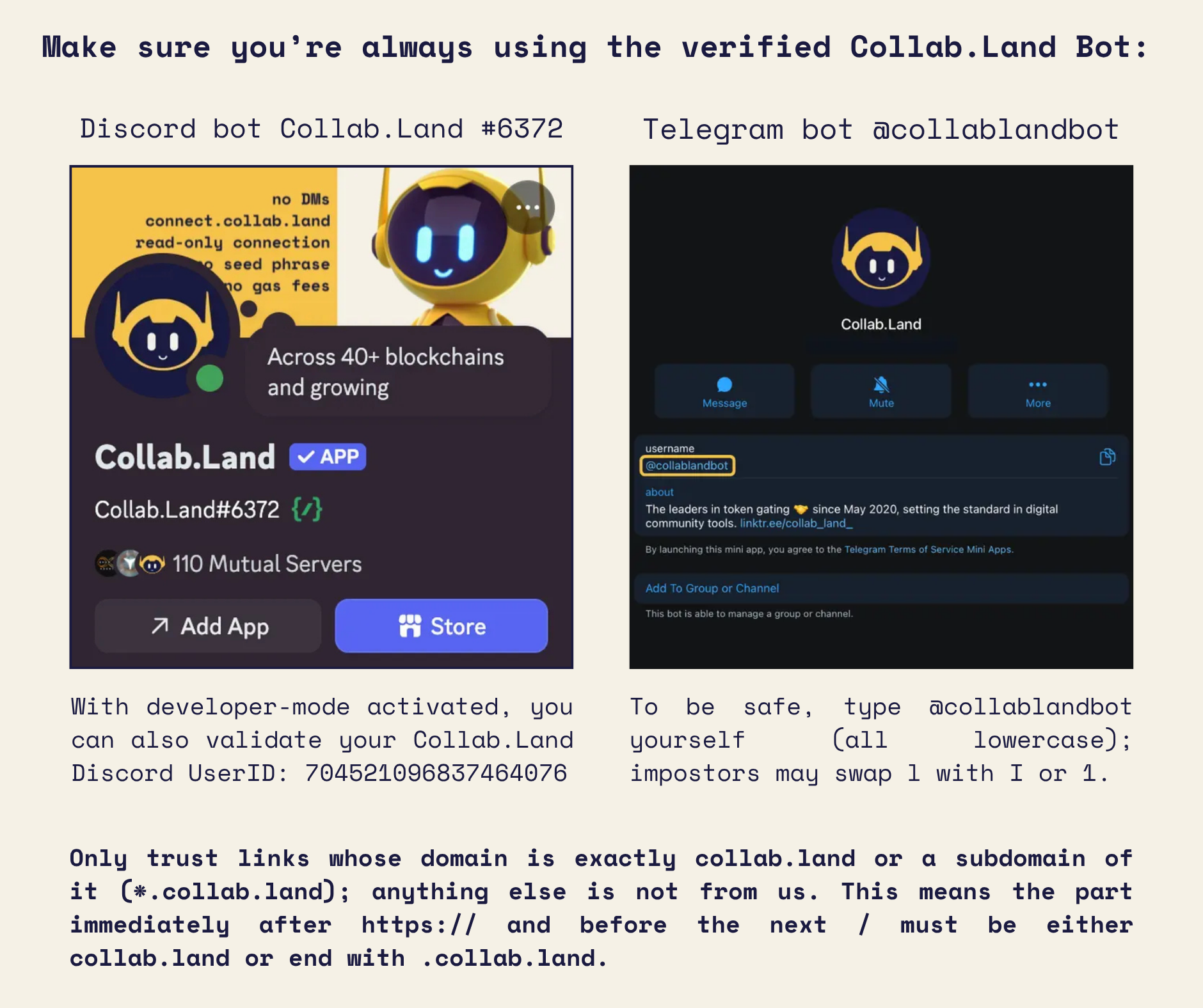
Collab.Land token gating and membership verification operates as a read-only application. By signing a message to add a new wallet, you affirm ownership of that particular wallet address. Collab.Land solely accesses public blockchains to verify that a member’s wallet addresses are linked to the required tokens for role or group membership. Collab.Land maintains no access beyond reading public wallet addresses, which are transparent to all users.