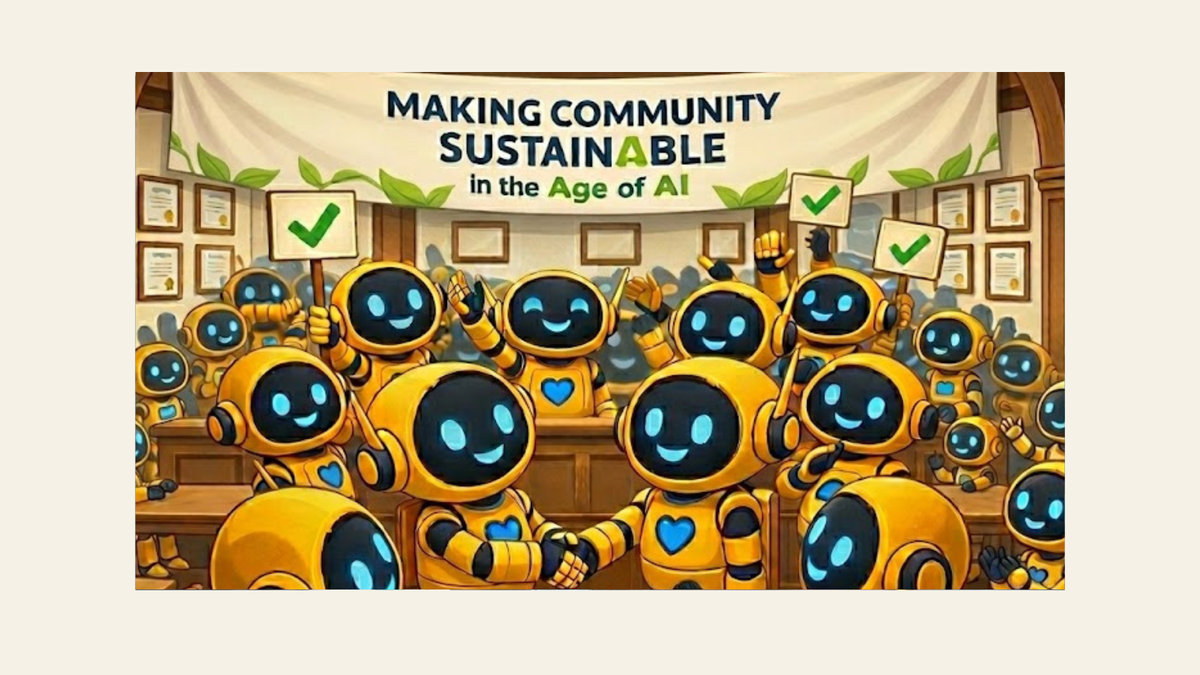
Making Community Sustainable in the Age of AI

By James Young, CEO and Founder, Collab.Land
We've had a front-row seat to thousands of token-gated communities at Collab.Land over the last six years. Some exploded. Some plateaued. Some faded. What surprised me most wasn't the failure rate. It was the reason behind it. Communities rarely collapse because people stop caring. They collapse because the economics were never designed to last. And AI is about to accelerate that problem in ways most community builders aren't prepared for.
That tension is what's been driving how we think about our next chapter.
The First Mistake: Confusing Access With Value
Token gating felt genuinely revolutionary when we started. It solved real problems - who belongs, who gets access, how you coordinate holders around a shared identity. It gave communities structure and meaning. But over time, we learned something that took me a while to sit with - access is not sustainability.
A Discord role is not an economy. A token is not a flywheel. A mint is not a business model. Most communities had one financial moment: mint, hype, secondary volume, fade, and mistook that spike for a system. If your only economic event is the launch, you don't have a community. You have a campaign.
What sustainable communities actually require are recurring economic loops: ongoing contribution, ongoing incentives, ongoing reasons to show up. Most of the communities we've worked with never had that layer. And honestly, we didn't build it for them. That's something I think about often.
The Second Mistake: Engagement Without Signal
There's a deeper problem that AI has surfaced, and it changes everything about how we should think about engagement.
Before AI, low-quality participation was manageable. Annoying, but bounded. Now it's infinite. AI can generate posts, replies, art, personalities, entire synthetic community members at scale, indistinguishable from real ones. Content is no longer scarce.
Signal is.
If you reward surface engagement (messages sent, emojis, generic activity) AI will farm it more efficiently than any human ever could. So the question worth asking isn't "how do we grow engagement?" It's something harder: what is provably valuable behavior?
Not activity. Not noise. Value.
Communities that can't answer that question clearly will eventually drown in their own metrics.
The Real Problem: Communities Aren't Designed Like Systems
What I keep coming back to is this: most communities operate like social groups, but the ones that endure behave like systems.
A system has incentives, feedback loops, reputation accumulation, capital allocation. If you don't design those intentionally, they still emerge, just accidentally, and usually in ways that hurt you.
Across thousands of communities, the patterns repeat. The same 5 to 10 percent of people do most of the meaningful work. Those people are rarely rewarded proportionally. Speculators often earn more than contributors. Trust stays informal and fragile. When momentum slows, there's no mechanism to reignite it.
That's not a people problem. It's a design problem. And it points to a gap in the infrastructure we've been building.
What AI Changes
Most people assume AI's role in communities will be moderation, or chatbots. That's the surface layer.
The more interesting shift is that AI can now observe, analyze, and route incentives in real time. Rather than manually identifying who adds value, or subjectively deciding who to promote, you can detect high-signal contributions, track reputation across platforms, forecast engagement decay, and reward measurable outcomes automatically.
AI stops being a bot and starts being an orchestrator. Not replacing community leaders, but augmenting the decisions they have to make every day. And when you pair that with crypto rails, something genuinely new becomes possible: programmable incentives, enforced by code, at the speed of community activity.
That combination is what we're building toward.
The Tactical Shift We're Making
At Collab.Land, we're shifting from being primarily a token gating tool to becoming a signal layer for communities. That's not a marketing pivot. It reflects a real change in what we think matters.
Identity Beyond Platforms. Identity shouldn't reset every time someone changes platforms. We're building around persistent identity layers where contributions become attestations and reputation compounds across contexts. If reputation is portable, long-term contribution becomes rational, not just noble.
Reward Contribution, Not Speculation. Speculation is easy. Contribution is hard. Communities need mechanisms that tie rewards to measurable actions, favor consistent contributors over short-term traders, and weight effort higher than capital. Quest systems tied to real outcomes, KPI-driven vaults, reputation-weighted access: these shift the culture from extraction toward investment.
Build Financial Loops, Not Financial Events. A mint is an event. A sustainable community has loops: campaign funding flowing to measurable results, flowing to reward distribution, flowing back into the system. We're experimenting with continuous incentive models and mechanisms that turn belief in community outcomes into something accountable and measurable.
Encode Trust Into the System. Trust is usually social and informal, which makes it fragile. AI and crypto together let you encode it structurally: verified through attestations, weighted through reputation graphs, rewarded through incentives, penalized through loss of access or influence. The strongest communities aren't the loudest. They're the ones where cooperation compounds.
The Hard Truth
AI is collapsing the cost of content and participation. When effort approaches zero, most engagement becomes meaningless.
The communities that survive this era won't be the most active ones. They'll be the most economically aligned: the ones that measure signal, reward contribution, penalize extraction, and tie culture to capital with intention.
Community sustainability isn't a vibes problem. It never was. It's an incentive design problem.
The Bigger Bet
Underneath all of it is something I find genuinely hopeful: communities are evolving into micro-economies, cultural coordination systems, distributed brands, creator collectives. They generate meaning in ways that neither AI nor capital alone can replicate.
AI helps detect value. Crypto enforces commitment. Communities generate meaning.
If we design this well, and I believe we can, communities won't just survive the AI era. They'll become stronger because of it. That's what we're building toward. And it's the work that feels most worth doing right now.
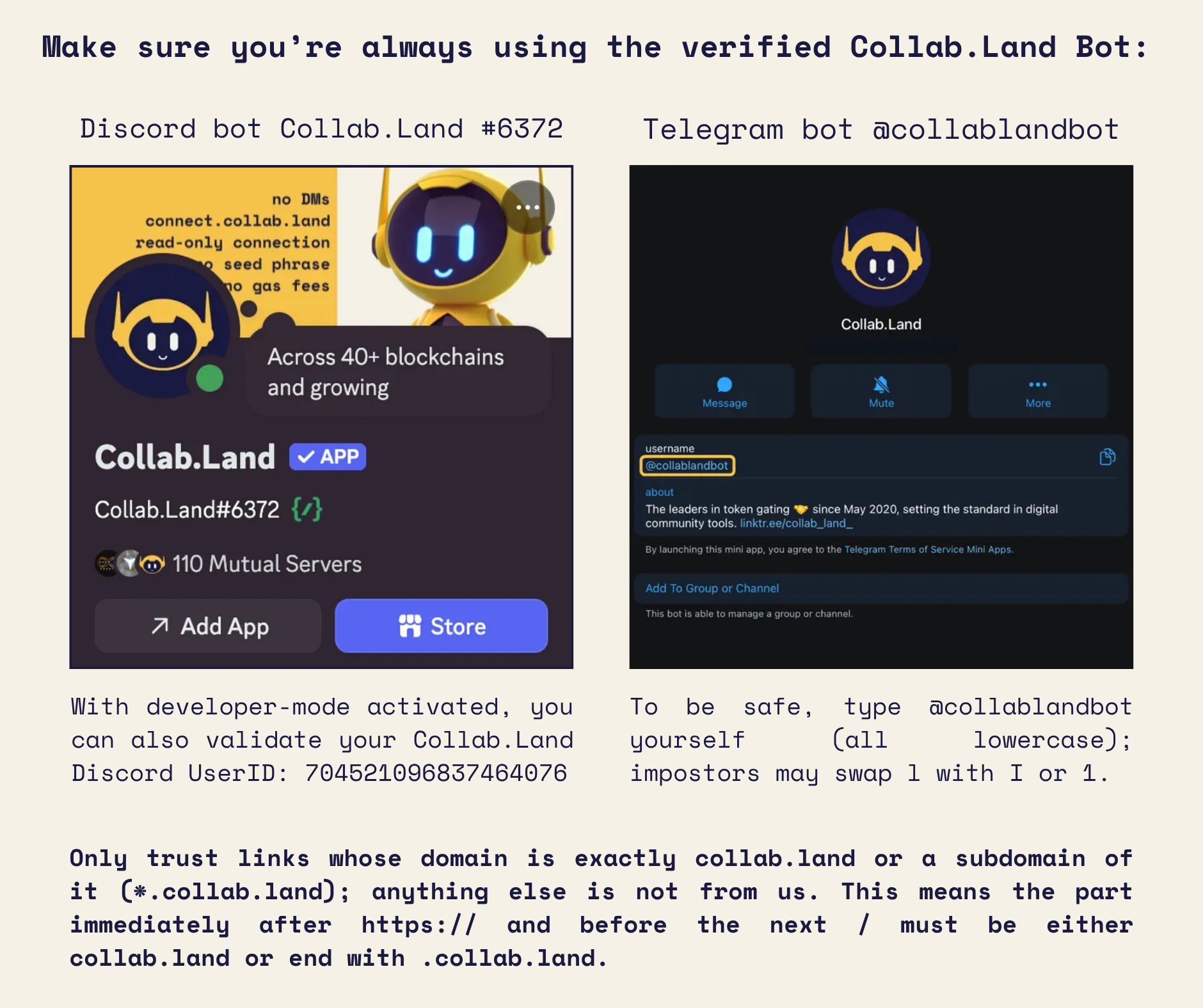
Collab.Land token gating and membership verification operates as a read-only application. By signing a message to add a new wallet, you affirm ownership of that particular wallet address. Collab.Land solely accesses public blockchains to verify that a member’s wallet addresses are linked to the required tokens for role or group membership. Collab.Land maintains no access beyond reading public wallet addresses, which are transparent to all users.