Coordination Is the Bottleneck: Thinking out loud about AI, crypto, and organizational physics


by James Young, Founder, Abridged Inc., Makers of Collab.Land.
The Productivity Trap
Most AI-at-work conversations I'm in start the same way. Engineers shipping 2x faster. Marketers producing 10x the content. Support teams resolving tickets in half the time. The numbers are real and the wins are worth celebrating.
I think this is the first step, though, not the whole picture. There's a question I've been sitting with for a while that I want to think through in public, because I don't have a clean answer yet: we might be celebrating the least interesting part of what's happening.
Here's the shape of the argument. Individual productivity gains look like a local optimum to me. The thing most organizations actually care about isn't faster individuals. It's faster organizations. Those are very different problems, and I'm not convinced the second one follows from the first as automatically as we seem to assume.
The direction I keep coming back to is that once you look at AI as a coordination technology instead of an acceleration technology, a different set of questions comes into focus. I'm confident that's directionally right. I'm much less confident about the specifics, and I'd rather this be a conversation than a pronouncement.
The Coordination Tax Nobody Measures
Coase asked a question worth re-reading right now: why do firms exist at all? His answer, that coordination is expensive, still holds. Firms exist because finding, negotiating with, and trusting counterparties is costly enough that pooling those costs inside a hierarchy beats paying them on every transaction. That cost didn't go away. We just stopped naming it.
Think about a typical product shipping inside any org you've worked at. Six weeks, say. How much of that is actually building. In my experience, maybe one or two. The other five are specs, reviews, approvals, context being rebuilt across handoffs, meetings about whether the meeting should happen. Coordination. Every step of it.
Amdahl's Law tells you something brutal here: the speedup you get from optimizing one part of a system is bounded by the parts you haven't optimized. If 80% of your product cycle is coordination and 20% is building, doubling build speed improves total throughput by 10%. You can make engineers 10x faster and barely move the needle on shipping velocity, because the bottleneck was never engineering.
Individual productivity gains don't fix coordination-bound systems. They just shift where the queue forms.
Agents Change the Shape of the Org
This is where I start to think something genuinely different might be happening.
A human contributor works inside a context window measured in their attention span. Context handoffs, the specs, tickets, standups, Slack threads, exist because no human can hold the full picture. Those handoffs are coordination cost made concrete.
Agents don't have that constraint. An agent can hold persistent context across systems. It can read every PR, every ticket, every spec, every conversation in every channel, and maintain coherent state across all of them. This isn't a speed improvement. It's a topology change.
At Collab.Land we've been building toward something we call a Director Agent pattern. Systems where human scaffolding gets removed incrementally as the agent earns trust in specific domains. We're still early, and plenty of what we've tried hasn't worked. But the hypothesis is that the scaffolding we built to compensate for humans not being able to hold full context becomes optional when that compensation is no longer needed.
What this might unlock is strange to think about. Parallelized coordination. Continuous context. Decisions that used to require a meeting happening because the agent already has everything the meeting was going to surface.
But participation isn't the same as permission. And the infrastructure that actually enforces the difference between the two already exists -- it just wasn't built with agents in mind.
Why I Keep Coming Back to Crypto
The lazy version of AI-and-crypto is everywhere and it's usually nonsense. Two hot technologies, stapled together, must be better than one. That pitch tells me nothing.
The version I actually believe is sharper. If agents are going to be participants in organizational coordination, not just tools humans operate, they need primitives that humans have taken for granted their whole careers.
Verifiable identity. There needs to be a durable, portable identity that persists across contexts and can be reasoned about. The work around ERC-8004 and on-chain agent registries is a stab at this.
Permissioned access. Role-based access control starts to bend when the "role" is held by an autonomous process chaining actions across systems. Token gated access, the thing we've been doing for human communities at Collab.Land for years, turns out to apply pretty directly to agent permissioning. The gate doesn't really care whether the holder is human.
Auditable commitments. Organizations run on implicit promises. When agents participate, those commitments probably need to be explicit and verifiable, and onchain commitments give you that nearly for free.
Programmable economic relationships. When an agent transacts on behalf of an organization, the rails need to support it without a human wet-signing every step. Crypto payment infrastructure was built for this.
The coordination substrate crypto has been building for the last decade turns out to be close to what autonomous agents need to operate at scale. We thought we were building infrastructure for trust-minimized coordination between humans. We might have been building it for humans and agents both.
What We're Not Ready For
I don't want to land this as a victory lap. The problems ahead look harder to me than the ones we're leaving behind.
Goodhart at agent speed. Goodhart's Law, that any metric used as a target stops being a good metric, assumes humans are doing the optimizing. Humans are slow, noisy, morally inconsistent. Agents aren't. When an agent optimizes a proxy metric, misalignment might compound faster than any human review cycle can catch. What Goodhart looks like at machine speed is something I don't think we're ready for, and I'd rather name it now than discover it later.
Coordination isn't coherence. You could have a team of agents that coordinate beautifully, smooth handoffs, clean commitments, verified identity, executing perfectly toward a goal that's subtly wrong. Coordination is whether the parts move together. Coherence is whether they're moving toward something worth moving toward. My honest read is that we're building the first and mostly not thinking about the second.
Accountability diffusion. A decision gets made by a chain. A human prompts, an agent drafts, a second agent reviews, a third executes, and something breaks. Every participant in that chain can plausibly point upstream or downstream. Organizations depend on accountability being locatable, and I'm not sure what institutions look like when it stops being.
Governance speed mismatch. Agents execute in milliseconds. Human oversight, boards, reviews, governance votes, legal review, runs in weeks. That's a structural gap. It either gets resolved toward agent speed and we lose meaningful human control, toward human speed and we lose most of the efficiency gains, or we invent something new in the middle. I don't know which of those is right, and pretending otherwise would be dishonest.
Where This Leaves Me
The frame I keep coming back to is this: the last decade of crypto was about trust-minimized coordination between humans. The next decade might be about trust-minimized coordination between humans and agents. We have most of the substrate. We don't yet have the institutions.
The question I spend most of my time on isn't whether AI will make organizations faster. It will. The question is whether the organizations that emerge on the other side of this transition are ones we recognize as legitimate. Coordinating efficiently toward the wrong ends isn't progress. It's a faster version of being lost.
The directional claim I’m making is this. Coordination, not productivity, is the bottleneck worth building against. Agents change the topology of how organizations hold context, which opens something real. And the primitives crypto has been building matter in ways that weren’t obvious when they were being built.
The specifics of how any of that plays out are still up for grabs. That’s the conversation I’d rather we were having together, because the work ahead feels more institutional than technical, and institutions don’t get built by any one person being right.
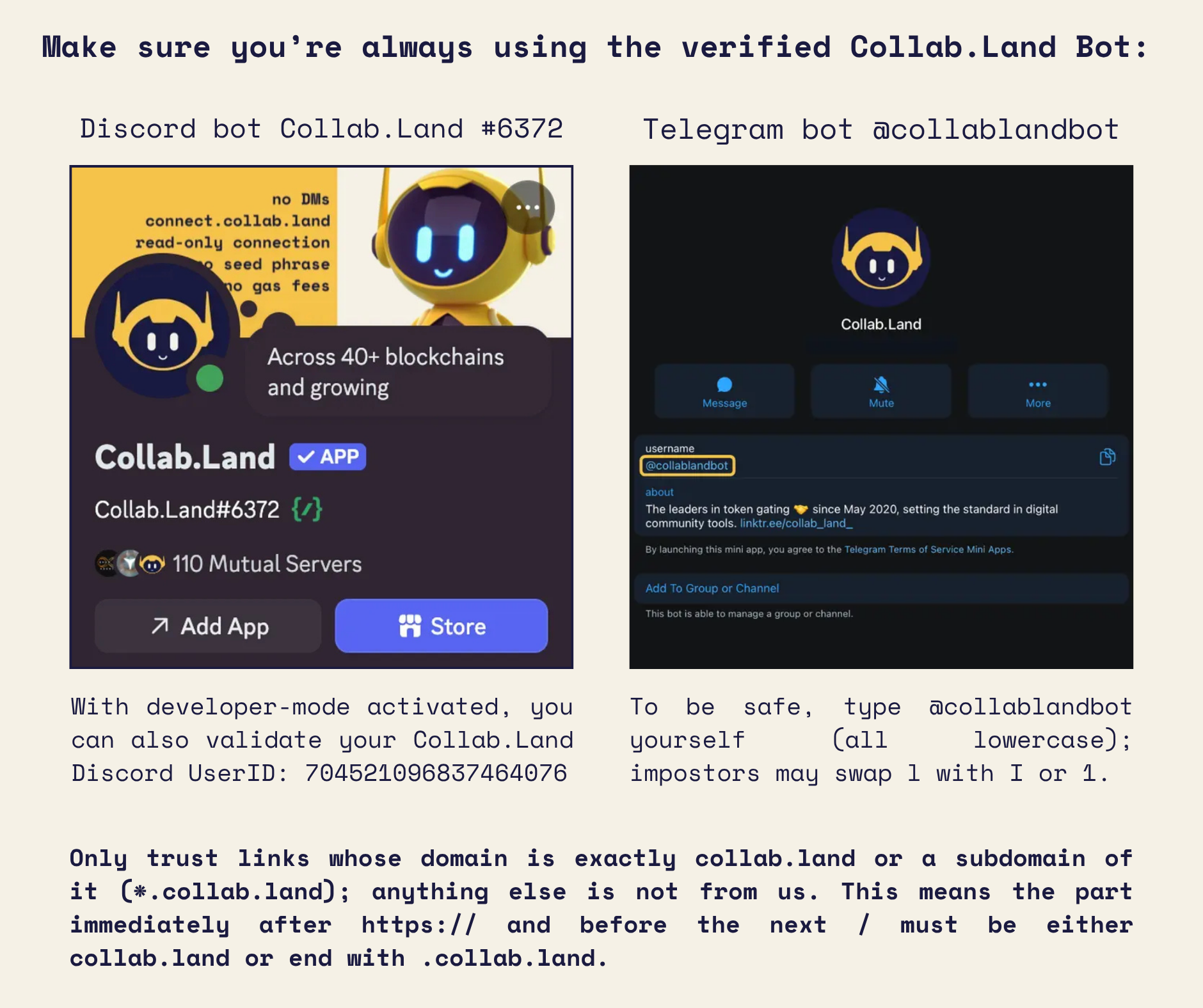
Collab.Land token gating and membership verification operates as a read-only application. By signing a message to add a new wallet, you affirm ownership of that particular wallet address. Collab.Land solely accesses public blockchains to verify that a member’s wallet addresses are linked to the required tokens for role or group membership. Collab.Land maintains no access beyond reading public wallet addresses, which are transparent to all users.