We Are Always Looking for Our People.
By Anjali Young
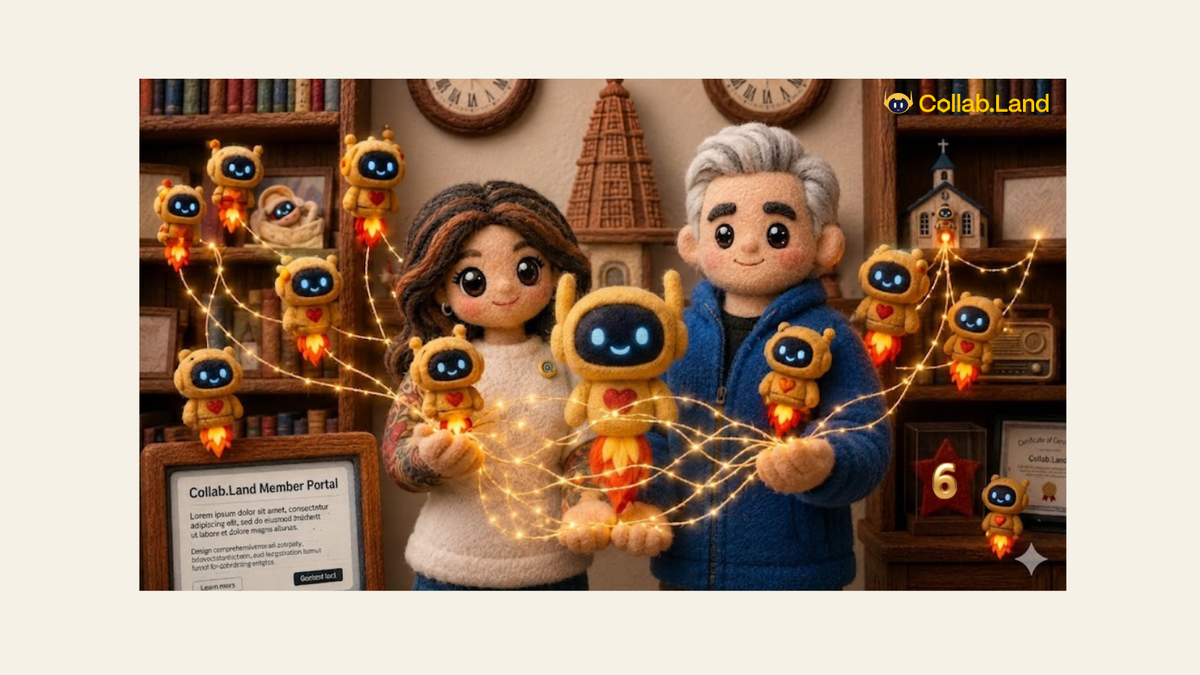
Collab.Land turns six this month. I have been sitting with that and searching for the words for what it brings up for me. James and I built this company together and are building a life together, and that is probably the most significant thing I can say. Collab.Land is woven tightly into both. After six years there is no clean line between any of it anymore. That has made this one of the most exciting and meaningful times of my life, and also one of the hardest. Every win is shared and magnified, and every hard day is too. Nobody warns you about that part.
James and I both grew up in immigrant families in the US. "Community" wasn't a thing we talked about. It just was. For me it was the Hindu temple. For James it was the Korean church. Different faiths, almost different everything, but the immigrant experience remained the same. That feeling of being seen by people. Of being welcomed and safer in a country that was foreign and uncertain. That shared understanding of what it means to hold one another up shaped our definitions of family and community - it is expansive and abundant. It is part of what brought James and me together and what has kept us together too. It is how we created our family, how we chose to expand it, and how we continue to grow our circle today. It is the belief we return to again and again, that those who deserve our attention, love, and care are part of a wider group than we first imagined, that love and community expand when you let them, always for the better. And this way of thinking and living is at the root of everything we have built at Collab.Land.
I didn't know at the time that I would get to carry that into my work. I don't take that for granted.
I have spent multiple decades in online communities before I had even heard of crypto. These were social spaces, places where you could finally stop feeling so different from everyone around you. Places to explore ideas and learn from others walking the same path. For a lot of us they were the only places where a community of your ideas could actually grow, where what we called back in Berkeley, where James and I were students, "subverting the dominant paradigm" was not a fringe idea but the whole point. Different spaces, different people, but the same core truth running through all of it. The way people need each other never changes.
And crypto communities are no different. If anything, they have made that lesson harder and clearer. Where there is opportunity, a bad actor will find it. We have seen that over and over. The scams, the exploits, the people who show up not to build something but to take something. That has been rough to sit with, because you come into this work with a real belief in what these communities can be, and then reality shows up and it is not quite what you pictured. That is just what it means to be an adult doing hard work with other people. You see the problems clearly and you do not get to look away. You face them, you deal with them, and you keep going. Not because you have figured it all out but because that is where commitment actually shows up.
James was deep in the DAO world, having co-written Moloch DAO and been one of the first contributors to MetaCartel. He understood that decentralized communities needed supporting infrastructure to function and to trust each other. I came to this with decades of knowing what communities feel like from the inside. Together we brought token gating to Telegram and Discord. In 2020 that category did not exist. We built it anyway, hit the pavement one community at a time, and that is how you get to where we are today, 50k+ communities strong. Getting to build this inside crypto, with those values at the core, is something I am still grateful for.
When you are building in crypto, you are usually at home. Alone. The office is a screen and your colleagues are in different time zones and there is no clean separation between work and life. When the thing you are building is an expression of something you inherited and something you lived and something you chose, the line between who you are and what you do does not just blur. It disappears entirely.
That is a hard way to live, and I want other founders to know that. When things get hard, and they do get hard, you are not just navigating a business problem. You are a person being told that something you love is not enough. Rejection does not feel like feedback. It feels like a verdict on who you are. You hold on so tightly because letting go feels like losing part of yourself. Nobody tells you that part going in, and even if they did, you would not have listened. Because that is what belief does to you.
People are also just complicated. They are all different and somehow all the same. Your best intentions are never quite enough when you are working with human beings at scale. You are going to get it wrong. You are going to disappoint a lot of people and miss something and make a call that looks right until it doesn't. And then you brush yourself off and you keep going, because that is the only honest response. You do not get to be precious about it.
If I could do it again, the one thing I would change is learning sooner how to hold both identities at once without letting them collapse into each other. The founder and the person. The professional and the human who grew up watching her family build a life one relationship at a time. You can be both and you have to be both, but merging them completely will cost you in ways that are hard to see until they are already paid.
I am still learning that. Six years in and I am still learning that.
What has never been in question is why we are here.
None of this would exist without the people who have shown up alongside us year after year. Not just shown up, but stayed. Through the highs and the crashes and the long quiet stretches where you just keep building and hope it matters. They are the ones who answer when a community member is stuck at midnight. The ones who care about getting it right even when nobody is watching. Because of them, crypto communities trust us with their members. Because of them, 3M+ unique community members and 10M+ verified wallets later, we have never had a security incident. Members and admins always come first. That has never been a policy. It has always been a people thing, and we have been lucky enough to find the right people.
And maybe that is also why community matters more now than it ever has. A lot of us are working alone more than we used to, in the same rooms, on the same screens, looking for the feeling of belonging to something real. That is not a crypto problem. That is a human problem. It is is just getting more urgent.
What is coming next for Collab.Land is a continuation of the same belief we started with. Smarter tools, a Member Portal that gives members a real home, AI agents that understand what a community needs, SmartTag moving real value between real people, and partnerships that put resources back where they belong.
The technology will keep changing. The reason we are doing it has not changed at all.
We learned what community means by living it, long before web3 existed. Watching our families figure things out together. Showing up when it mattered. We have had the chance to carry those beliefs into an entirely new space, and that is not lost on me.
Six years in, it still comes down to the same question.
How do we help people find their people?
We have been trying to answer that question for six years now. We have not gotten it perfectly right. We have gotten it right enough to still be here, still be building, and still believe it is worth it. That feels like something worth celebrating.
Happy birthday, Collab.Land.
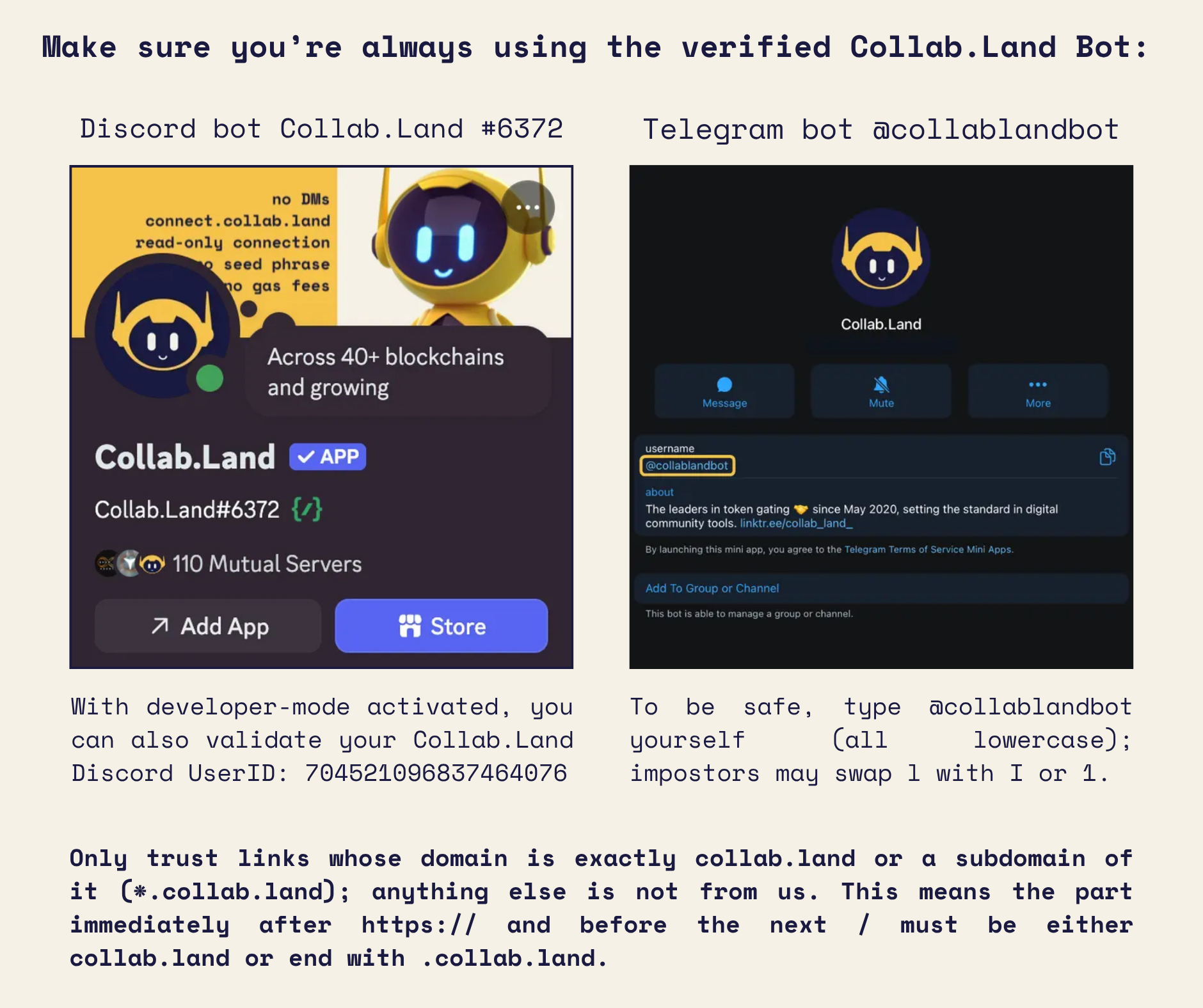
Collab.Land token gating and membership verification operates as a read-only application. By signing a message to add a new wallet, you affirm ownership of that particular wallet address. Collab.Land solely accesses public blockchains to verify that a member’s wallet addresses are linked to the required tokens for role or group membership. Collab.Land maintains no access beyond reading public wallet addresses, which are transparent to all users.